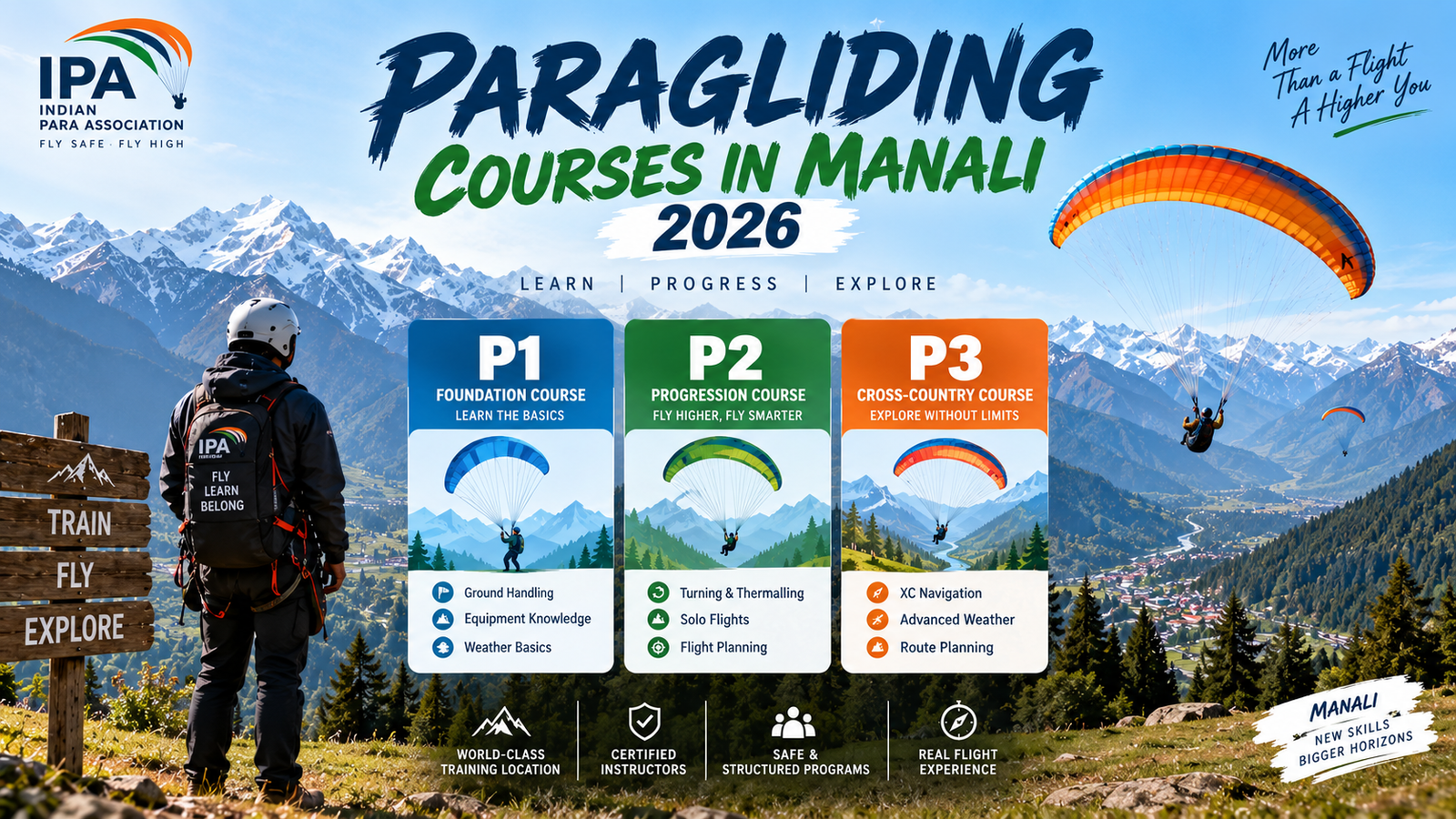
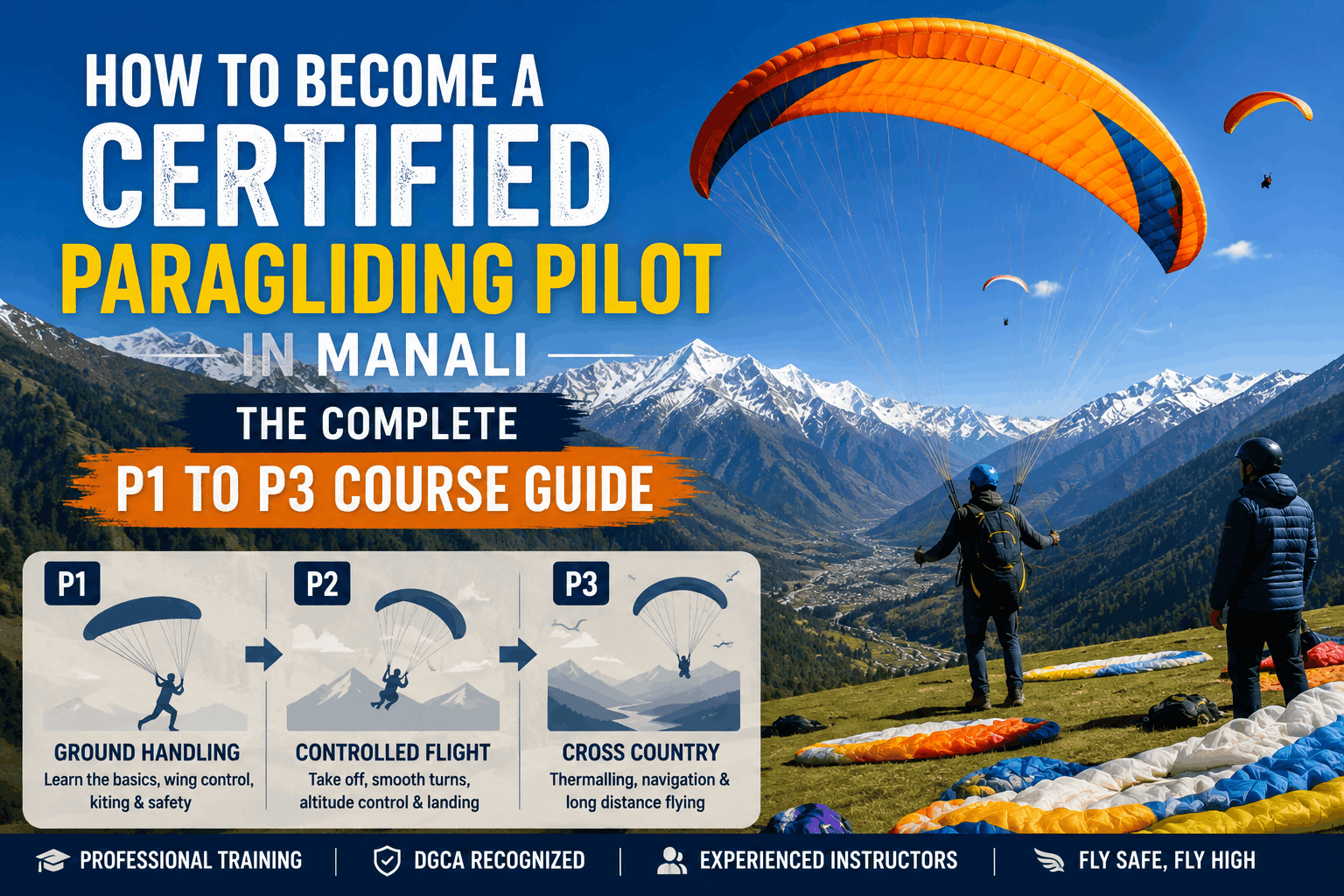
How to Become a Certified Paragliding Pilot in Manali: The Complete P1 to P3 Course Guide
Most people who try paragliding in Manali do it once, as a tandem flight, and never think about it again. But a growing number of flyers want more than a 10-minute joyride — they want to actually fly solo. If that’s you, this guide breaks down exactly how India’s paragliding certification system works, from your very first ground-handling lesson to flying cross-country as a licensed pilot.
Tandem Flight vs. Paragliding Course: What’s the Difference?
A tandem flight is a passenger experience — you’re strapped in alongside a certified pilot who controls launch, flight, and landing. It’s a great introduction, but you’re not flying; you’re a passenger with a great view.
A paragliding course (P1, P2, P3) is structured pilot training. You learn to control the wing, launch, navigate, and land independently, working toward becoming a certified solo pilot. If a tandem flight left you wanting to be the one holding the brakes, a course is the next step.
Understanding the P1, P2, P3 Certification Levels
India’s paragliding training generally follows a three-stage progression, mirroring international standards used by paragliding federations worldwide.
| Level | Who It’s For | Duration | Focus Areas |
|---|---|---|---|
| P1 – Beginner | First-time learners, no experience needed | ~6 hours (1–2 days) | Ground handling, basic launch & landing, safety fundamentals |
| P2 – Intermediate | P1 graduates ready to progress | ~12 hours (3–5 days) | Controlled turns, thermalling basics, advanced ground handling |
| P3 – Advanced | P2 graduates aiming for XC flying | 20+ hours (5–7 days) | Cross-country navigation, advanced maneuvers, weather reading, flight planning |
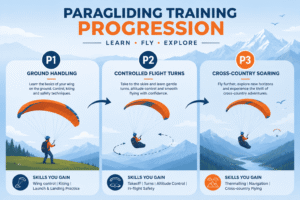
ession stages infographic
What You’ll Actually Learn in Each Course
P1 Course – Beginner (₹21,000)
This is where every pilot starts. You’ll spend most of your time on the ground before you ever leave it — learning how to control the wing on flat terrain, understand wind conditions, and execute your first supervised launches and landings. By the end, most students complete short, controlled solo flights under close instructor supervision.
P2 Course – Intermediate (₹39,000)
Once basic control is second nature, P2 shifts toward actual flying skills: controlled turning, maintaining altitude, and an introduction to thermalling — using rising warm air currents to stay airborne longer. This is the stage where flying starts to feel less like a lesson and more like piloting.
P3 Course – Advanced (₹59,000)
P3 is built for those aiming to fly cross-country — navigating between locations, reading weather systems, and executing advanced in-air maneuvers. Graduates typically have 20+ hours of practical flying experience and the skills to pursue XC (cross-country) flying independently.
Is Paragliding Training Safe for Beginners?
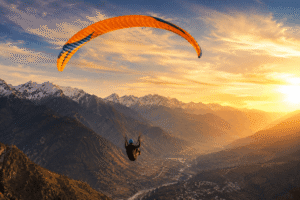
Yes — when done through a certified school with proper equipment and progression. Reputable training follows strict protocols:
- Weather assessment before every session — wind speed, thermals, and visibility are checked
- Modern, inspected equipment — wings, harnesses, and reserve parachutes meeting safety standards
- Gradual skill-building — you don’t fly solo until ground handling is mastered
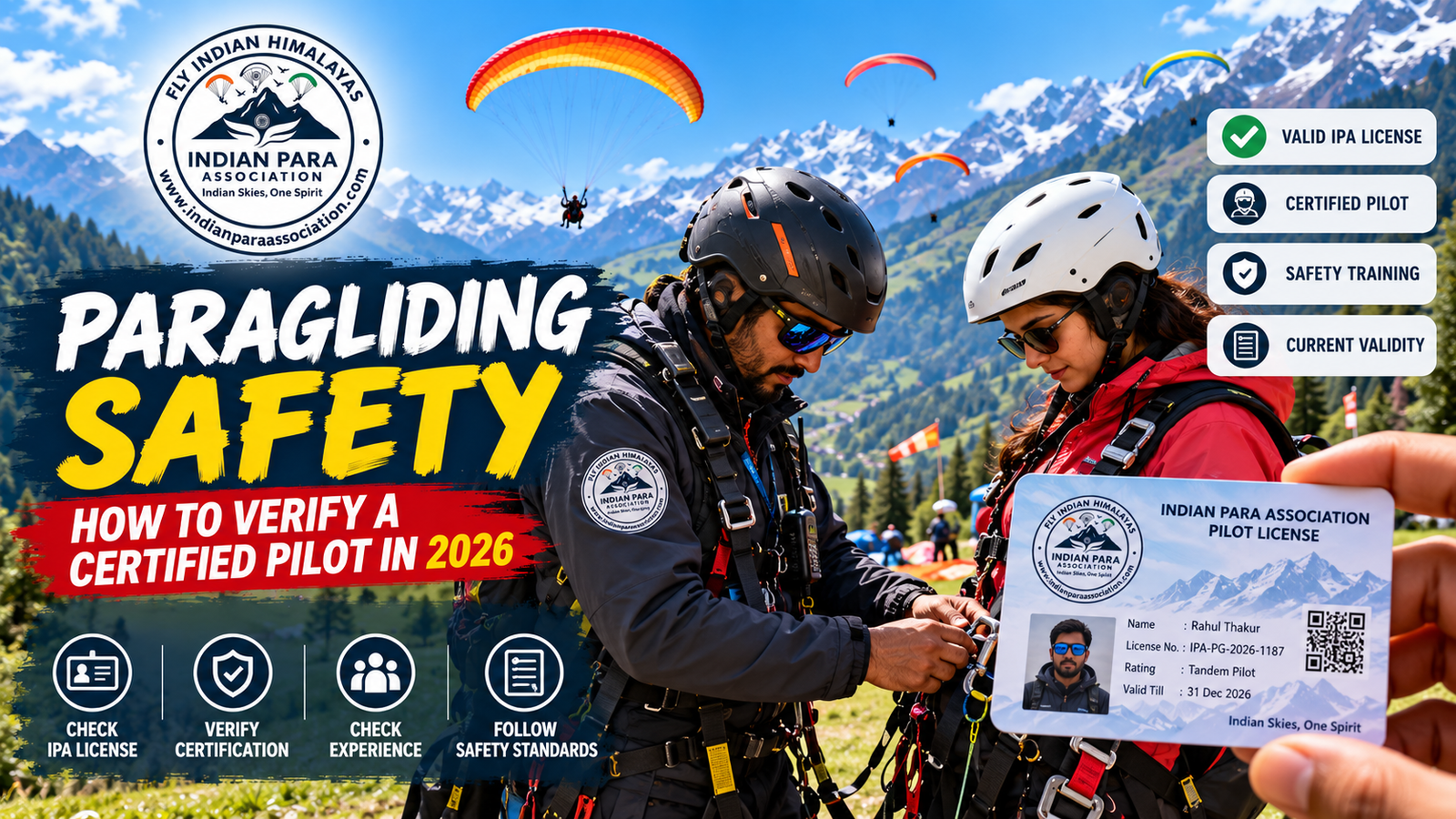
- Certified instructors — trained pilots supervise every stage, not just tandem flights
The biggest safety factor isn’t the sport itself — it’s choosing a school with experienced, certified instructors and a structured, unrushed curriculum.
What to Expect Before You Enroll
- Age & fitness: Most schools require a minimum age (commonly 16+ for full courses) and basic physical fitness for running launches
- Best season: Training windows generally align with stable wind conditions — spring (April–June) and post-monsoon autumn (September–November) tend to offer the most consistent flying days
- What to bring: Comfortable closed-toe shoes, weather-appropriate layers, and sunglasses — most schools provide the wing, harness, and helmet
- Time commitment: Even the P1 course requires full, uninterrupted days — this isn’t something you can squeeze between sightseeing stops
Why Choose Solang Valley for Paragliding Training?
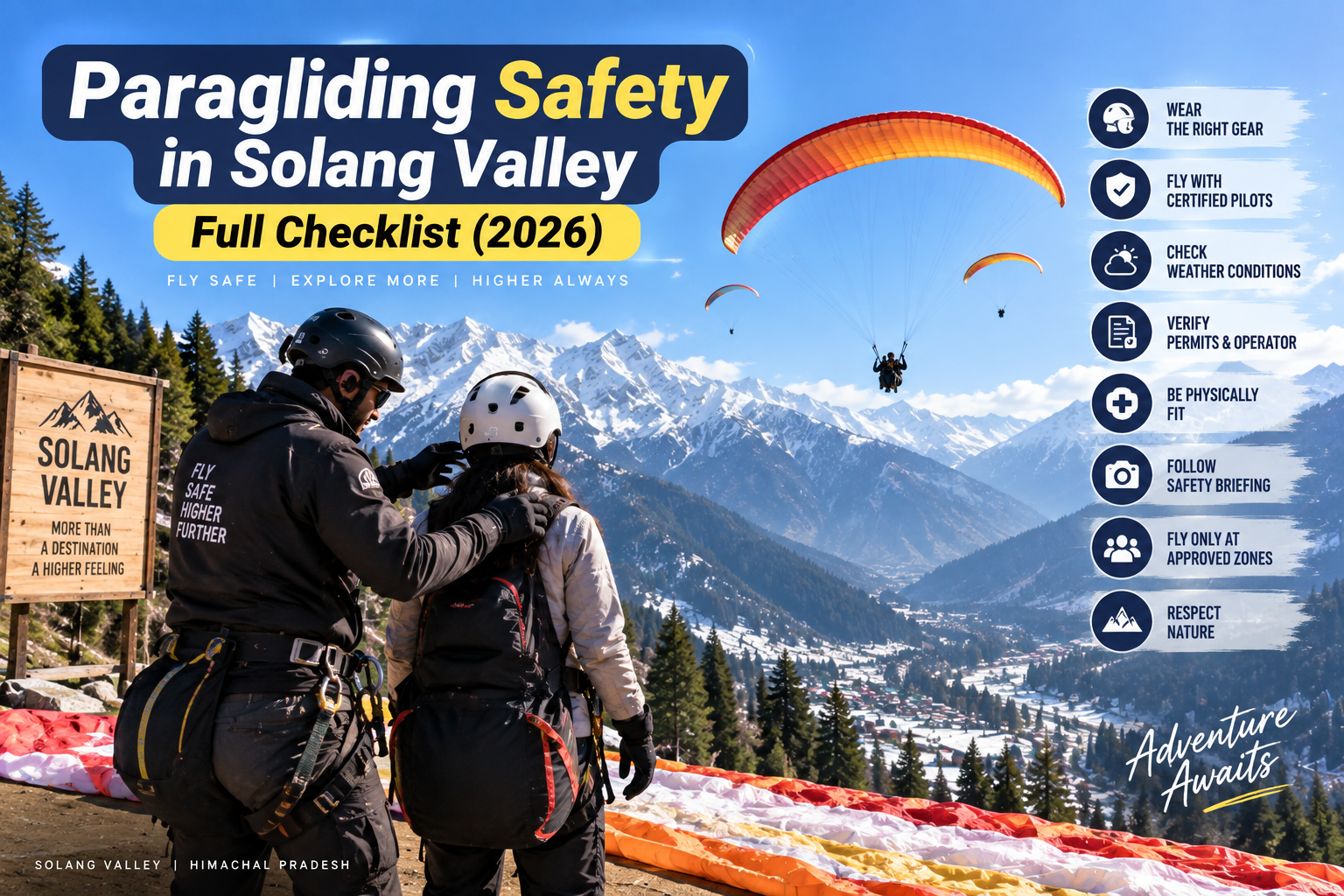
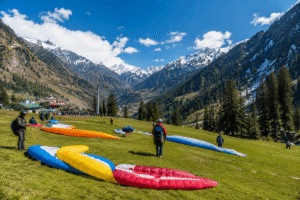
Solang Valley near Manali is one of India’s most established paragliding training grounds — and for good reason. Its combination of a gentle, grassy training slope, predictable seasonal winds, and stunning Himalayan backdrop makes it ideal for progressive skill-building, from your first nervous launch to solo cross-country flights.
FAQs About Paragliding Courses in Manali
Do I need prior experience to join a P1 course? No. The P1 course is designed for complete beginners and starts with fundamental ground handling before any flying takes place.
How long does it take to become a certified paragliding pilot? Completing all three levels (P1 to P3) typically takes 10–14 days of combined training, though many pilots space courses across multiple trips to build experience between levels.
What’s the difference between a tandem flight and a P1 course? A tandem flight is a short passenger experience with a pilot controlling the flight, while a P1 course teaches you to control the wing and fly yourself under instructor supervision.
Can I do a paragliding course if I’ve only done tandem flights before? Yes — most pilots start with a tandem flight and later decide to enroll in a P1 course; no formal experience is required to begin.
What is the best season to learn paragliding in Manali? April to June and September to November generally offer the most stable wind and weather conditions for training, though schools assess conditions daily.
Start Your Pilot Journey with Indian Para Association
From your first ground-handling session to advanced cross-country flying, Indian Para Association’s certified P1, P2, and P3 courses are designed to take you from complete beginner to independent pilot in Solang Valley, Manali.
View Course Details | Book on WhatsApp